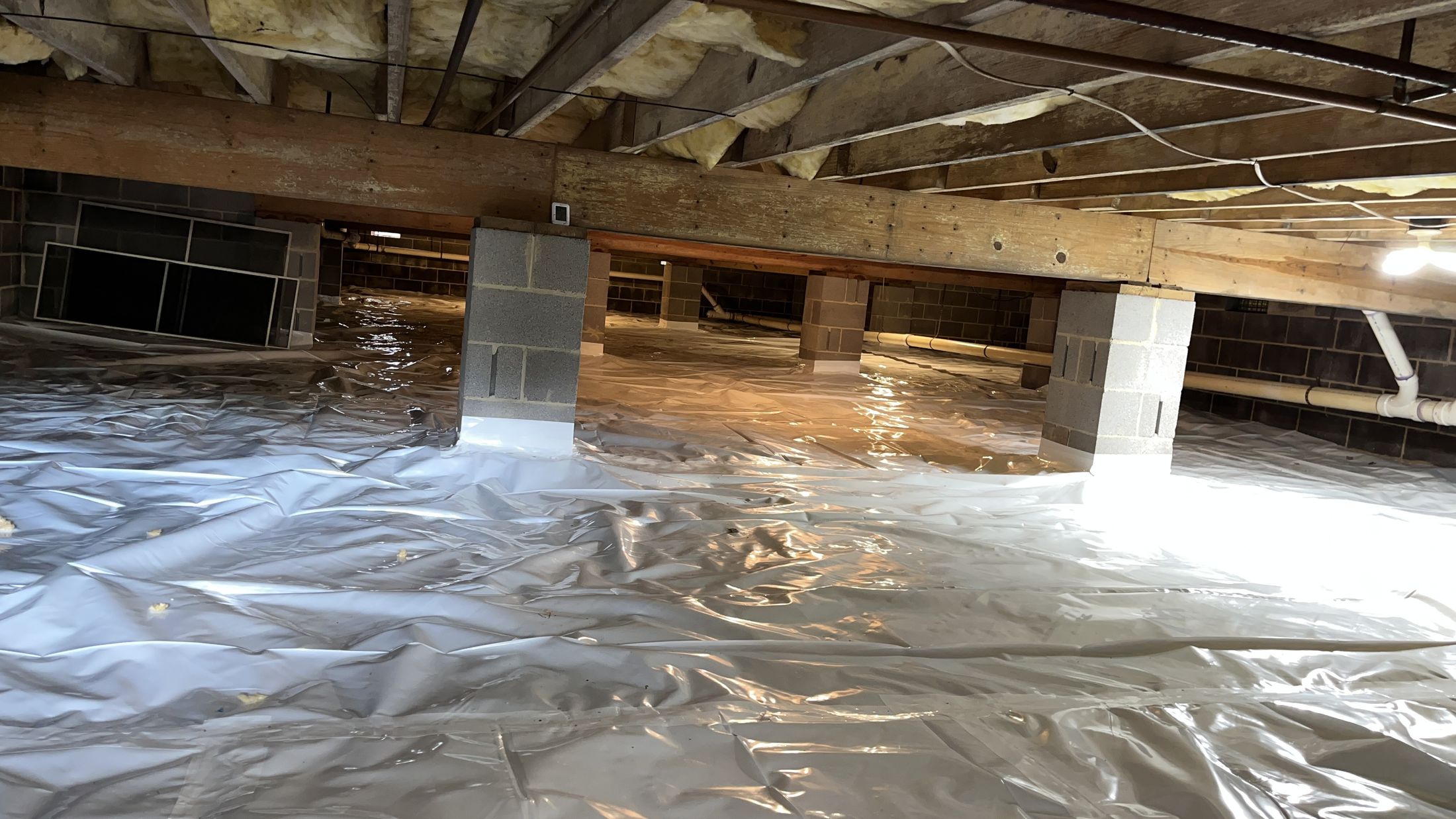
Crawl space encapsulation time depends far more on the condition of the space than on how fast anyone works. Homeowners in the Roanoke Valley usually want to know two things: how long the crew will be around, and what could stretch the schedule. This guide covers what sets the clock and how to keep a job moving.
Start with the condition of the crawl space
The fastest jobs begin with a space that is dry, reasonably clear and easy to reach. The slowest begin with standing water, piles of debris, old torn plastic, wet insulation and low clearance. Every one of those has to be dealt with before the new vapor barrier goes down, and each adds time.
That is why we look at the space first. Once we have seen it, we can give you a realistic schedule instead of a hopeful one.
Size and layout matter
A small, open crawl space is simply less to cover than a large one with several sections, tight corners and a lot of piers. Each pier, pipe and post needs its own careful sealing. Odd shapes and split-level layouts mean more cutting and fitting.
Water has to come first
If water enters the space, it must be handled before sealing. That might mean a French drain, a sump pit and pump, or exterior drainage and grading. Our drainage systems page explains those options. A job that includes drainage naturally takes longer than a barrier-only job.
Weather can also play a part. Heavy rain can delay exterior work, and a crawl space that keeps refilling is hard to seal. We plan around that so the space is protected in the right order.
What is included in the encapsulation itself
The core steps are cleanup, laying the vapor barrier over the floor, running it up the walls and piers, sealing the seams and the pipe and post penetrations, and a final check. A dehumidifier is added afterward. You can see each stage on our crawl space encapsulation page.
A straightforward job is a shorter one. Adding drainage, mold work, insulation replacement or repairs to framing makes it longer, and we tell you that up front.
Other things that add time
Repairs found once the space is cleared, such as rot, damaged supports or plumbing that needs attention, can add steps. So can limited access, homes with pets that need to be kept out, and scheduling around your own commitments. None of these is unusual, and they are all easier to plan for in advance.
If the job involves structural concerns, our foundation repair page explains how that work fits in.
How to keep a job on schedule
Clear the access point so the crew can get in and out. Move stored items away from the entry. Tell us about anything you know, such as past leaks, where water shows up, or a previous repair. Be reachable during the job so questions get answered fast.
A small crew that stays with the job also helps. Because the same people who scoped the work are doing it, there is less back and forth and fewer surprises.
What a realistic schedule looks like
We think about a job in stages: access and cleanup, water control, the barrier and sealing, then equipment and the final walkthrough. Each stage has a natural end point, so you can see progress instead of waiting for one big finish. If a stage takes longer than expected because of what we find, we tell you and adjust the plan.
When you talk to any contractor about timing, ask how the job is broken up, what could change the schedule and how they will let you know. A clear answer is a good sign.
Talk through the schedule before you sign
Ask when the crew would start, which days someone will be on site and what happens if the weather turns. Ask who you should call if you have a question in the middle of the job. Those small answers tell you a lot about how organized a contractor is and whether the schedule they give you is one they intend to keep.
Do not rush the process
A rushed encapsulation is one where seams are not fully sealed, drainage is skipped or the space is not dry when it is closed up. Those shortcuts cost more time in the long run. We would rather take the time to do it correctly and give you a straight answer on the schedule.
Next step
For pricing questions, see how much crawl space waterproofing costs and our pricing page. We work in Blacksburg, Salem and Roanoke, so call (540) 494-3541 or request a callback to talk through timing.
Want a realistic schedule?
Tell us about your crawl space. After we look at it, we will give you a timeline we can hold to.